
'/%3e%3cdefs%3e%3clinearGradient%20id='prefix__paint0_linear_4737_37157'%20x1='3.018'%20y1='23.6'%20x2='44.925'%20y2='24.977'%20gradientUnits='userSpaceOnUse'%3e%3cstop%20stop-color='%231CB7FF'/%3e%3cstop%20offset='.502'%20stop-color='%232FF58B'/%3e%3c/linearGradient%3e%3c/defs%3e%3c/svg%3e)

What Michael Carrick's rollercoaster Middlesbrough tenure reveals about Man United's new manager: How his 'unplayable' football and unshakeable faith in youth won over fans - and how it all came unstuck after giving his brother a job
Jan 17 2026 02:16 · بواسطة Ian Herbert · 35 عدد المشاهدات


It was a February night at Sheffield United in 2023 that they were calling to mind in Middlesbrough this week, when trying to imagine a world in which Michael Carrick proves to be the resurrecting force that Manchester United have been seeking for so long.
Descriptions like ‘unplayable’ and ‘perfection’ and ‘beautiful’ were spilling out in pubs like the Twisted Lip, Rafferty’s Bar and Sherlocks on the town’s Baker Street, where you’ll find the definitive view on Boro from those fans who are the club’s heart and soul.
It was no exaggeration. The 3-1 win for the club at Bramall Lane came at a time, in the second of half of Carrick’s first season here, when Middlesbrough were the Championship’s best-performing team and had been transformed into something unstoppable by him.
The matchwinner was Cameron Archer, one of the club’s loanees, but it was Carrick’s ‘miracle man’ – Chuba Akpom – a below average forward before Carrick arrived, turned him from a No 9 to a No 10 and transformed him into the Championship’s player of the season – who everyone was remembering.
Akpom scored yet again that night, on the way to a 29-goal season tally which blew Bernie Slaven’s 33-year-old Boro goalscoring record out of the water.
Near Rafferty’s, they were relating all this with such a fond and sentimental glow that a spontaneous rendition of the song about ‘Super Michael Carrick’, knowing ‘exactly what we need,’ struck up. ‘Dael Fry at the back, Chuba in attack. The Boro’s going to the Premier League …’
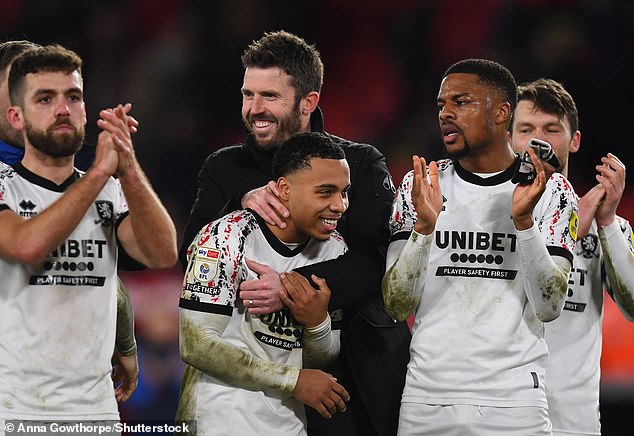
In the second half of Michael Carrick’s first season with Middlesbrough they were one of the Championship’s best-performing teams
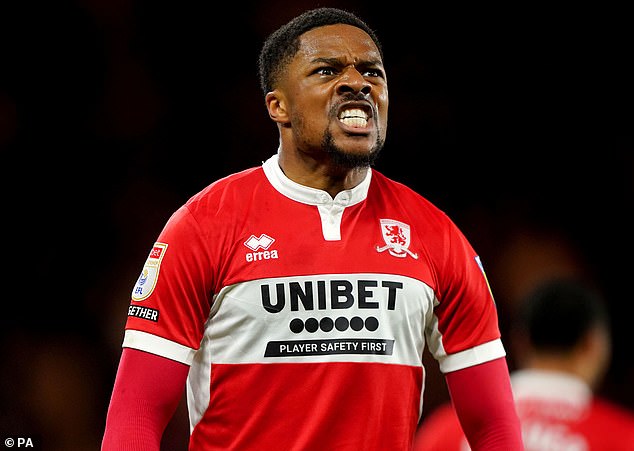
Chuba Akpom – a below average forward before Carrick arrived – was turned from a No 9 to a No 10 and became the Championship’s player of the season
They didn’t, of course. When the play-off semi-final arrived, Coventry City manager Mark Robins had Carrick’s number, nullifying the team’s free-scoring spirit and breaking their hearts. Things never got better than that season for Carrick in the North East. He was sacked last June.
There are very specific reasons why those remaining rank-and-file members of the Manchester United workforce who have not been culled by Sir Jim Ratcliffe see Boro’s loss as their gain, as Carrick returns to Old Trafford, with a lunchtime Manchester derby to set the new interim manager on his way this weekend.
He was the one who, perhaps more than any other senior player, would always look out for them – ensuring that the backroom teams were taken out for a drink at the end of the season, and that taxis home were laid on.
He was the one who latched onto what was good about the Manchester United ‘family,’ ensuring that everyone from the reception staff to the laundry team were made to feel a part of it. Ineos have clinically dismantled the old sense of a United ‘community'. Carrick’s return created the sense around Old Trafford, this week, that it is perhaps not entirely dead.
It’s the same kind of authenticity that many remember about Carrick on Teesside. There was the time when decorated Irish jockey Graham Lee, who accessed Boro’s training ground as part of his fitness regime, had been paralysed in a fall at Newcastle in November 2023. Carrick quietly sought out Lee’s son, Robbie, and encouraged him to use the club’s facilities whenever he wanted. ‘We’re here for you all. This place is your place.’
When a Boro-supporting journalist and author, Mark Davies, wrote A Love Letter to Football, a beautiful book charting how the club had been a beacon of light through his cancer treatment, Carrick and his coaching team were enthusiastic about promoting it. ‘I’ll never forget the support for me. It reflected the kind of club Boro has always been,’ Davies says.
Players from that time credit Carrick with improving them, too. Akpom, who left for Ajax at the end of the 2022-23 season, was transformed under his tutelage. Aston Villa’s Morgan Rogers credits him with the career-changing period he spent on loan at Middlesbrough in the 2023-24 season. Midfielder Hayden Hackney tells the same story. Kobbie Mainoo, Chido Obi and Shea Lacey can take heart.
But that ‘niceness’ of Carrick’s undoubtedly fed into the football. He also left Teesside with a reputation for being bound to a predictable, aesthetically pleasing pass-and-move style with ‘only one distinct way of playing’ as Sunderland’s extremely adaptable and dynamic manager Regis Le Bris rather brutally described the team down the A19 after beating them in 2024.
Carrick left Teesside with a reputation for being bound to a predictable, aesthetically pleasing pass-and-move style of football
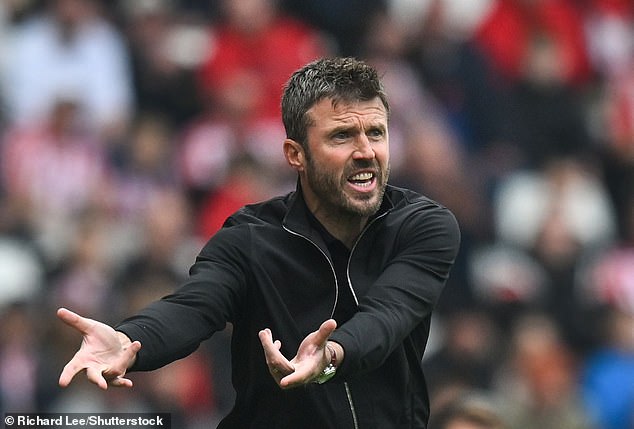
That ‘niceness’ of Carrick’s undoubtedly fed into the football. 'They were not streetwise,' says Dominic Shaw of the Northern Echo
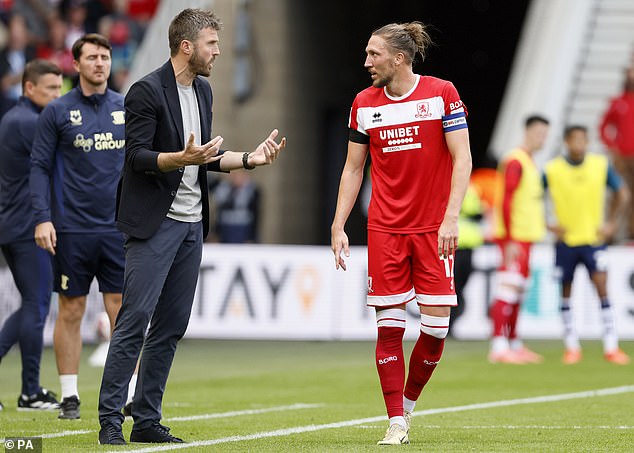
Carrick didn’t like it when journalists put it to him that Boro had a ‘soft underbelly’, as they struggled to live up to that first season. But they certainly did.
‘They were not as streetwise as they needed to be,’ says Dominic Shaw, who covers the club for The Northern Echo . ‘Being unable to see games out was a repeated problem and there was also a sequence of conceding shambolic goals through poor defending.’ Montages of these catastrophes have been assembled, with the comically poor last-minute goal shipped at Preston last January generally featuring among them.
After a 0-0 draw at home Norwich, the caretaker manager Jack Wilshere related how he’d asked the Canaries’ kit man, an avid fan, to give the team talk. ‘Even the kit man seemed to have more answers,’ Shaw remembers.
Carrick’s steadfast refusal to give anything away to journalists didn’t help. The media pack is relatively small beneath the Premier League, even at a club as big as Middlesbrough, yet Carrick was reluctant to develop relationships with that group or give so much as injury updates, as Boro slipped to eighth and 10th place finishes in his second and third seasons.
Some who had known him from links to his native Tyneside, where he played for the famous Wallsend Boys Club, were surprised that he showed no hint of recognition of them when he arrived back in the North East at the Riverside. ‘He was hard work. There was little effort to engage and no recognition, which was unexpected,’ says one. ‘It seemed like an indifference to where he had arrived at.’
Only towards the end of the third season, with fans becoming increasingly frustrated, did Carrick seem to display a little more personal warmth towards the press, perhaps seeing some value in these people who could help him get a message out.
There were fleeting hints of a personality behind Carrick’s media stone wall. At one Boro community event in which he and others appeared in some local pubs and clubs, he appeared surprisingly relaxed and personable, displaying some rare humour and character. Some of those present privately observed that he would benefit from showing that side more. It was the same stone wall the following week.
This does suggest something of a Mr Grey, as do the results Carrick received after filling in a ‘Predictive Index’ report to establish what kind of character he is, at the suggestion of one of Manchester United’s coaches when he was nearing retirement.
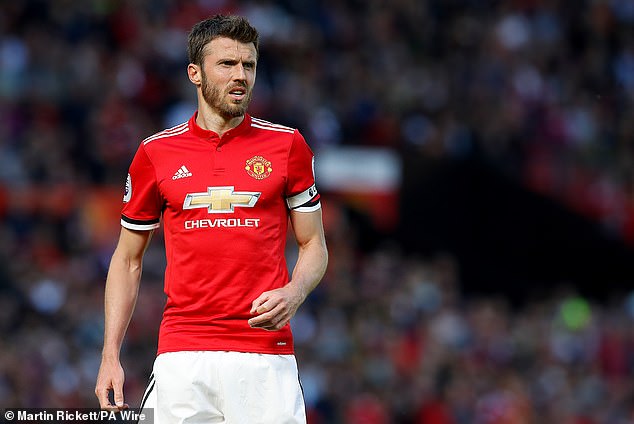
Carrick was a deep thinker at Manchester United according to his former team-mate Wayne Rooney
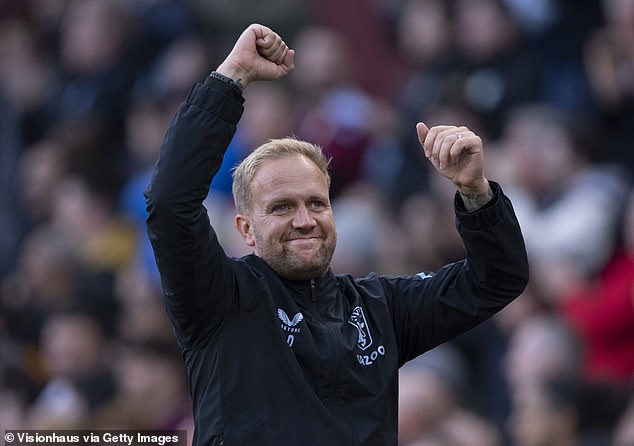
Aaron Danks, who joined Vincent Kompany at Bayern Munich, is widely thought to have been a major contributing factor to Carrick’s initial success at Boro
‘Michael is a helpful, patient, stable person who works steadily and consistently. He prefers having, and following, a well thought-out process to ensure success,’ the report found.
But Wayne Rooney had his reasons for declaring on Friday that appearances can be deceptive and that no one should be fooled by Carrick’s ‘calmness’. At United, where Carrick was certainly one who enjoyed a pint, he was also seen as a deep thinker who, if things had gone wrong, would be looked on to speak to the media, where he could be relied on to talk with authority and a level head.
At Middlesbrough, his most questionable act was a decision to replace first team coach Aaron Danks with his own brother Graeme, previously the Newcastle United Under 18s coach when Danks left for Germany.
Danks, who had joined Vincent Kompany at Bayern Munich, is widely thought to have been a major contributing factor to Carrick’s initial success. ‘Replacing a really highly rated coach with your brother, who had been a junior coach at Newcastle, doesn’t create a great impression,’ Shaw observes.
Carrick’s recruitment of Steve Holland as his assistant at Old Trafford, where his brother will not be a part of the coaching set-up, suggests a lesson has been learned. Holland will be seen as the ‘brains trust’ in Carrick’s otherwise relatively inexperienced coaching team, which also includes Jonathan Woodgate and Jonny Evans.
In Gareth Southgate’s England set-up, Holland was the one looked to for the answers when there was a need to tweak things. It will be the same now. Carrick is aware that there is a fragility in this United group, borne of the chaotic changes Ruben Amorim would make, half an hour before kick-off. Holland, a vital presence, is there to make sure everything is clear.
Despite that clear sense that he was not adaptable enough at Middlesbrough, there is no doubt that Carrick will not cleave obsessively to one way of playing, as Amorim did, and that will see the need to adjust to events.
He brings an ‘if you’re good enough, you’re old enough’ approach to young players, having first been thrown into the West Ham team by Harry Redknapp a day after his 18th birthday - moving south after Kevin Keegan disbanded the Newcastle United reserve team. Expect him to encourage risk in young players, just as he did in Akpom and Rogers at Middlesbrough.
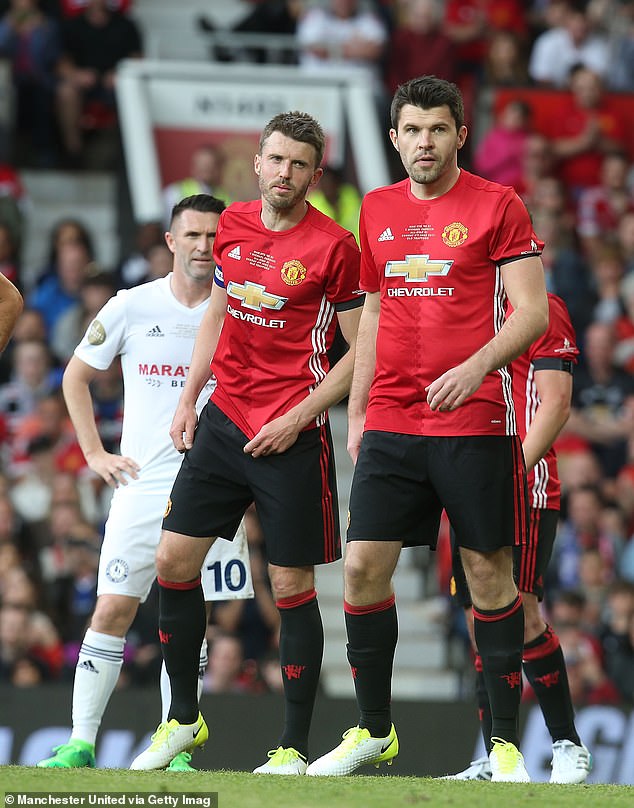
One of Carrick's most questionable acts at Boro was to give his brother Graeme, previously the Newcastle United Under 18s coach, a role at the club
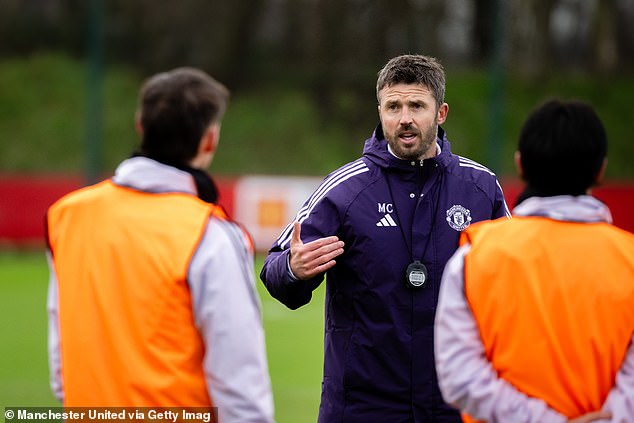
Carrick gets to work this week at United but he's 'not a magician' as Alan Shearer points out
In an extended interview for the Graham Hunter Podcast five years ago, he said he was influenced by the way that Redknapp and Ferguson both encouraged him ‘to get on the ball in high-risk areas’, in a way discouraged by other managers.
He returns to the rhythms of the working life he once knew. The familiar drive into Carrington from the detached house he had built in a hamlet above Prestbury, across the road from where Mark Hughes lived for many years. The intimate familiarity with the Old Trafford anthems and what they mean. He’s been able to recite ‘From the banks of the River Irwell to Sicily’ and ‘We will drink to Eric the king’ for years.
His three seasons at Middlesbrough – the only period by which his management can be judged – pale in comparison with the eight titanic years Ferguson spent at Aberdeen, smashing the duopoly of the Glasgow clubs. The outcome of that Teesside period tells us that he has not secured this half season at United on merit. As Alan Shearer put it on Friday, ‘Michael Carrick is a sensible option, but not a magician.’
He restores fundamental sense after the rank madness of the Amorim era, though. And he brings along with him the story of that magical period on Teesside, in 2022-23, when he took Middlesbrough on a journey, and the proof it offers of how quickly a club can be transformed utterly by change.
‘It was a brilliant time,’ says Shaw. ‘He brought an immediate upturn and by the second half of the season, had made Boro a team who really were unplayable at times. That was their big moment. They should have gone up. And if they had done, who knows what might have happened next?’