
'/%3e%3cdefs%3e%3clinearGradient%20id='prefix__paint0_linear_4737_37157'%20x1='3.018'%20y1='23.6'%20x2='44.925'%20y2='24.977'%20gradientUnits='userSpaceOnUse'%3e%3cstop%20stop-color='%231CB7FF'/%3e%3cstop%20offset='.502'%20stop-color='%232FF58B'/%3e%3c/linearGradient%3e%3c/defs%3e%3c/svg%3e)

Premier League clubs have lost a staggering £4.9 BILLION since 1992 - here's why Arsenal are miles better than anyone else at combining saving and silverware, and where YOUR club ranks in the profit table
Jan 23 2026 03:10 · By Ian Herbert · 32 Reads


Manchester City have employed a familiar PR device to mitigate for their £1billion-valued squad’s defeat by Bodo/Glimt, with the club’s so-called four ‘captains’ declaring they will refund the cost of tickets of their travelling fans.
Given that those tickets cost a mere £25, the ‘gift’ equates to less than two per cent of Erling Haaland ’s weekly salary - and he had three team-mates to help him stump up. Hence the mirth at Haaland’s ‘largesse’ in some quarters. Money’s not always the answer.
City’s humbling at the hands of a squad valued at £54million, taken with Crystal Palace ’s embarrassment in the FA Cup at National League North’s Macclesfield 10 days earlier, has shown the Premier League ’s high-and-mighty how shrewd, organic, sustainable clubs can stand up to their vast wealth.
An extraordinary sense of the Premier League club’s relentless and unfettered spending arrived in data published this week which revealed that since the competition’s launch in 1992, its clubs have lost a mind-blowing £4.99billion between them, with a mere 10 clubs responsible for 90 per cent of those losses.
Chelsea are the most prolific contributor to the sea of red ink, racking up a bewildering £1.2bn of losses over the Premier League era - principally because of Roman Abramovich arriving, tooled up with the limitless cash he’d made out of the ruins of Soviet Russia, and ‘firing £50 from the tanks he’s parked on our lawn’, as Arsenal ’s David Dein once put it.
And then there are City and the Abu Dhabis – officially fourth in this financial table with nearly £600million of losses, according to their officially published accounts. We will learn more about the reliability of those accounts when their '115 charges’ case is finally resolved. Chelsea have reduced their own vast figure by selling hotels, car parks and their own women’s team to themselves and ‘earning’ around £275m in the process.
Manchester City's 'four captains' will reimburse the travelling fans who attended their loss at Bodo/Glimt, albeit the money represents a tiny proportion of Erling Haaland's salary

The losses chart – far more revealing than the revenue-obsessed annual Deloitte Football Money League report which was published on Thursday - was compiled by Liverpool University’s Kieran Maguire, based on a study of pre-tax losses from clubs’ accounts.
The Premier League, like Deloitte, may want to focus on the cash rolling in, making top-flight revenues a full 3,000 per cent higher now than they were in 1992. But wages have increased by 4,100 per cent in that time and transfer spend by 4,500 per cent.
‘Yes, the Premier League is successful in bringing in money,’ says Maguire, football finance specialist and co-host of The Price of Football podcast. ‘But the clubs have a problem with spending.’
That spending has been stratospheric, he says, because of an ‘owner class’ wanting to spend to succeed in the Premier League arms race, and because of the 1995 Bosman ruling which forced clubs to pay higher wages to keep players.
Drowning in red ink are Aston Villa, a club who complain they are being held back by Profit and Sustainability Rules (PSR) designed to prevent them breaking into the elite, yet who have run up bigger losses than any other club bar Chelsea. Everton, a catastrophically managed club in recent years, have never finished higher than fourth in the Premier League, yet have amassed £633m in losses.
Fulham owner Shahid Khan has sanctioned questionable decisions over the years – not least a dalliance with US data guru Craig Kline – and his club are also in the ‘top five’ club for losses amassed. They eclipse Manchester United, whose catastrophe of the past decade or so have turned their own colossal earning power into losses.
City have won a trophy for every £26m of losses accrued since 1992 and Chelsea one for every £45m. Spurs fans, with two League Cups and a Europa League since ’92, would gladly swap, taking no delight from their club being far more in the black than any other club across the Premier League era.
But if you judge a club by a measure of sustainable success – which anyone dispassionately viewing the Premier League from outside the bubble certainly would – then Arsenal are the ones who can walk tallest.
Football finance expert Kieran Maguire, host of The Price Is Football podcast, has publicised every Premier League club's balance sheet since 1992
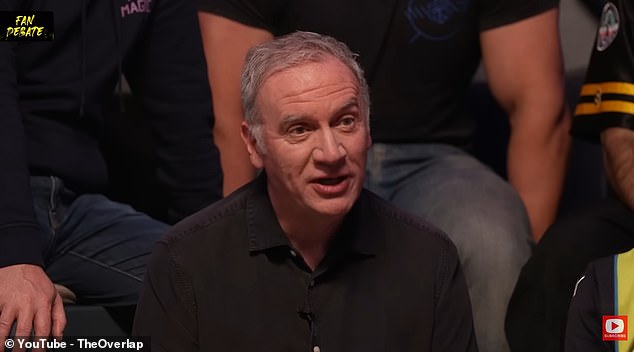
Everton have lost £633million in that time, wasting money on transfer flops like Sandro Ramirez and Davy Klaassen, but still haven't finished in the top three in the Premier League era

Their fans do not need reminding that it’s been 22 years since they last won the Premier League, but they have collected that pot three times, along with nine FA Cups, a League Cup and European Cup Winners Cup, whilst commanding an overall profit of £132.4m. Only Spurs have been further into the black.
‘They (Arsenal) have been super smart,’ Maguire says. ‘Always viewed as the Bank of England club and conservative, but that has not been to their detriment. They were ahead of the curve in terms of moving to a new, expanded stadium. Others followed them in that respect.’
Much of that vision was Arsene Wenger’s. In his excellent book Where’s the Money Gone? , which charts how so many clubs lacking the financial might of this new ‘owner class’ got left behind, Adrian Goldberg relates how Wenger viewed Abramovich’s unfettered spending with distaste.
‘Chelsea have enhancement of performances through financial resources which are unlimited,’ Wenger said. ‘For me, it’s a kind of doping because it’s not in any way linked to their resources.’ He felt the same about Gulf wealth at City.
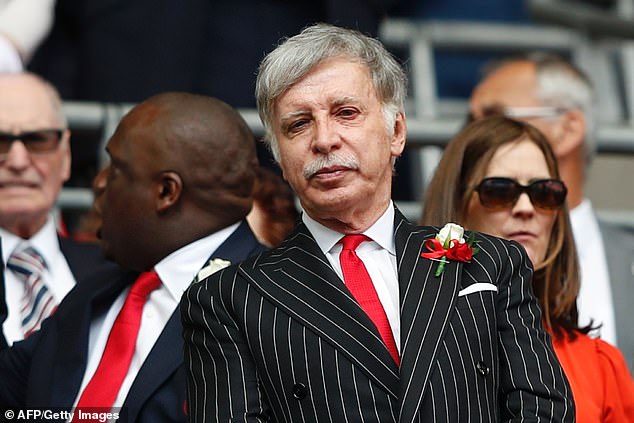
Arsenal’s creed of sustainability has, of course, been maintained by owner Stan Kroenke, whose conviction that Arsenal would ‘complete the set’, after his US franchises triumphed in the NBA, NFL, Super Bowl and even National Lacrosse League, often seemed improbable.
At Arsenal, like all of franchises, he has been unwilling to sanction top salaries, yet there has been an eventual realisation of what is needed and the Premier League now does look attainable.
‘The club have found their sweet spot,’ says Maguire. A league table of club wage bills last season, extrapolated from the latest Deloitte Money League and company accounts by The Athletic , put Arsenal at fourth, beneath Liverpool, Manchester City and Chelsea, at an estimated £338m. Maguire’s ‘losses’ table also shows Liverpool have been sustainable and in the black.
Arsenal have been 'super smart' says Maguire. The Gunners are the second most profitable club since 1992, and have won three titles in that time

Arsenal’s creed of sustainability has been maintained by owner Stan Kroenke, who also owns a host of franchises in the US
The size of the losses pose questions about the sustainability of the Premier League, a competition in which even PSR allows clubs to run at losses of £105m every three years.
The size of domestic TV deals – the commercial engine of everything – are flattening, albeit the league is the only one in the world which generates more money from overseas rights than domestic.
'It’s sustainable for as long as the attitude among owners remains the same,’ says Maguire. ‘It only takes an owner to get a call from a club wanting more money and saying, “Sod this for a game of soldiers”. It’s ridiculously risky.’
And it’s doubly humiliating when you lose in the Arctic Circle.