
'/%3e%3cdefs%3e%3clinearGradient%20id='prefix__paint0_linear_4737_37157'%20x1='3.018'%20y1='23.6'%20x2='44.925'%20y2='24.977'%20gradientUnits='userSpaceOnUse'%3e%3cstop%20stop-color='%231CB7FF'/%3e%3cstop%20offset='.502'%20stop-color='%232FF58B'/%3e%3c/linearGradient%3e%3c/defs%3e%3c/svg%3e)

Report: Man United considering three managers as potential Ruben Amorim replacements
Jan 10 2026 14:16 · By onefootball.com · 46 Reads


Manchester United are once again standing at a familiar crossroads, searching for leadership while attempting to redefine authority at Old Trafford. According to reporting by The Mirror , Sir Jim Ratcliffe, INEOS and the Glazer family have no intention of consulting Sir Alex Ferguson on the appointment of the club’s next permanent manager. It is a decision loaded with symbolism, history and risk, one that speaks to United’s desire to modernise while still living in the long shadow of their most successful figure.
United are expected to name a caretaker next week, before turning to a summer appointment. The shortlist is suitably heavyweight, Thomas Tuchel, Carlo Ancelotti and Mauricio Pochettino, names that carry Champions League pedigree and global credibility. Yet the process itself, rather than the candidates, has become the story.
Ferguson’s influence has loomed large ever since his retirement in 2013. Seven permanent managers later, the club is still grappling with how to move forward without leaning backwards. The Mirror reports that Ratcliffe and INEOS have “no desire to get Fergie’s input on what could be a defining decision for the club’s long-term future”, a clear statement of intent from a new power structure.
This comes after Ferguson’s role as a global ambassador was terminated in 2024 as part of cost cutting measures. It was a financial decision, but also a cultural one. Yet removing a contract does not remove presence. Ferguson remains a regular at Old Trafford and Carrington, even visiting the training ground 24 hours after Amorim had been sacked to speak with senior figures.
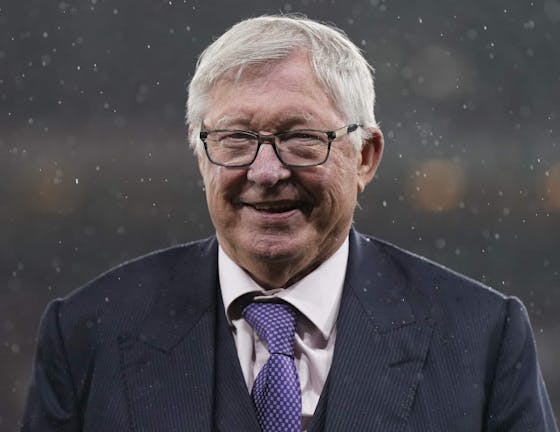
Photo: IMAGO
United’s hierarchy, including chief executive Omar Berrada and director of football Jason Wilcox, believe they can “make the right choice without Fergie’s influence”. That confidence will be tested not just by results, but by perception.
There is irony in Ferguson’s absence given his known admiration for Pochettino and his close friendship with Ancelotti. These are managers who align with United’s historic values, attacking football, authority, dressing room control. Yet United will be appointing their third full time boss since 2024 and seventh since 2013, an alarming statistic that underlines instability.
The club now faces a delicate balancing act, choosing experience without nostalgia, authority without overreach. A caretaker appointment may buy time, but it will not buy trust.
The decision not to consult Ferguson came hours after a fierce public intervention from Roy Keane. Speaking on Sky Sports, he said, “Who is making the decisions at United, you have still got Ferguson and David Gill hanging around like a bad smell. Who is making the decisions? [Sir Jim] Ratcliffe, Wilcox? Who is going into the interview process, getting a feeler for them and saying, ‘this is the guy for us’.”
Keane went further, recommending Eddie Howe as the man to steady the ship. “I’d go with Eddie Howe. I like him. I like what he’s done. He’s managed seven or 800 games. He’s still a young man. I love his calmness. Maybe Man Utd need a little bit of that.”
Keane’s words cut because they echo a wider truth, that United have often struggled to define who truly holds the reins. Credit to the Mirror for capturing a moment that feels less like transition and more like reckoning.
As rival supporters looking on, this situation feels both fascinating and faintly unbelievable. Manchester United , once the gold standard of authority and clarity, still appear unsure who they are meant to be without Sir Alex Ferguson. There is excitement in seeing a club finally attempt to step out from under a single towering figure, but also scepticism about whether they have earned the right to do so cleanly.
From the outside, it feels risky to shut the door entirely on Ferguson’s counsel, especially when the shortlist features managers he knows, respects and understands. Ignoring that insight does not automatically make the process more modern or smarter. It simply makes it different.
There is also concern that United are mistaking symbolism for strategy. Removing Ferguson from the conversation looks bold, but boldness without coherence has defined much of their post 2013 era. Fans across the league will be watching closely, not with fear, but with curiosity.
If United get this right, it marks a genuine reset. If they get it wrong, the questions will only grow louder, about governance, identity and whether the club is still trying to outrun its own past rather than finally understanding it.