
'/%3e%3cdefs%3e%3clinearGradient%20id='prefix__paint0_linear_4737_37157'%20x1='3.018'%20y1='23.6'%20x2='44.925'%20y2='24.977'%20gradientUnits='userSpaceOnUse'%3e%3cstop%20stop-color='%231CB7FF'/%3e%3cstop%20offset='.502'%20stop-color='%232FF58B'/%3e%3c/linearGradient%3e%3c/defs%3e%3c/svg%3e)

The bold decision Michael Carrick faces to implement his Manchester United masterplan
Jan 26 2026 19:13 · By onefootball.com · 13 Reads


When Thomas Tuchel was parachuted into Chelsea mid-season four years ago, he actually arrived by plane. And on it, he devised the tactics that propelled a team who had languished in mid-table in the Premier League to Champions League glory. It involved a change of shape, to a 3-4-3 formation.
When Michael Carrick was taken from the relative obscurity of being a former Middlesbrough manager and given the Manchester United post for the rest of the campaign, the situation was different; the solution too. Carrick veered away from a 3-4-3 system, the easiest and most popular thing he could do. An Old Trafford season ticket holder could have spent much of his time in the stands contemplating what he would do with the players he inherited – though, when asked, Carrick showed his innate ability to downplay and deflect. “Not consciously really,” he said last week. “I think it's obviously something that clicks into gear when you think maybe it might be on my toes to do something about it.”
Yet Carrick has arrived with a similar clarity of thought , with a formula that instantly looked as though it suited his players. His 4-2-3-1 formation has been notable for the instant impact some players have made: Patrick Dorgu , signed as a wing-back, criticised by Ruben Amorim for bringing an air of anxiety when he was on the ball, only had one goal for United. Reinvented as a left winger by Carrick, he has two in as many games. Bryan Mbeumo was bought to be, and largely used as, the right-sided No 10. As a striker, a role he rarely played for Brentford last season, he scored in wins over Manchester City and Arsenal. Diogo Dalot was back to right-back, Bruno Fernandes to play No 10, Kobbie Mainoo to playing at all.
It formed a contrast with the start some of his predecessors made. Amorim started with a draw at Ipswich as he unveiled his policy of squeezing square pegs into the round holes his 3-4-3 demanded: Noussair Mazraoui on the right of a back three, Dalot as a left wing-back, Alejandro Garnacho as a No 10. Erik ten Hag had a summer to plan for his bow against Brighton and somehow started with Christian Eriksen as a false nine. It was not the sign of things to come. Ralf Rangnick used his beloved 4-2-2-2 in his first match in interim charge, with Jadon Sancho and Fernandes the No 10s behind strikers Marcus Rashford and Cristiano Ronaldo. The shape did not last, in part because Ronaldo did not press. Louis van Gaal started off with Jesse Lingard as a wing-back. United lost to Swansea.
It is safe to say Carrick’s early decision-making has been altogether surer than theirs. His is a short-term task. It has been the most auspicious of starts, propelling United into fourth.
It also raises questions about what comes next. With a mere 15 games to go, does Carrick even need to alter much? After all, and while Casemiro’s legs can prevent him from starting three games in a week, United’s fixture list is so slender they only have two midweek matches in the remainder of the season. If Carrick chooses, it should be possible to operate with a small core.
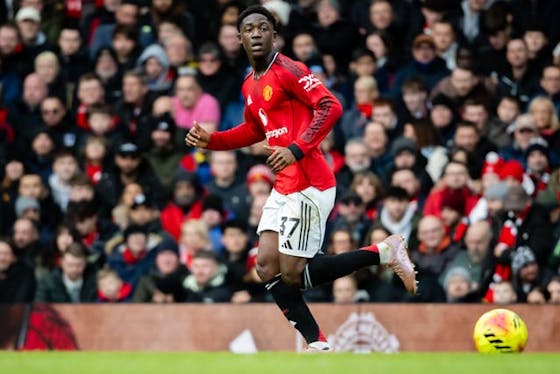
open image in gallery
Kobbie Mainoo is one of a few players to benefit from Michael Carrick's return to Old Trafford (Manchester United via Getty Imag)
One issue is whether they require a different approach for the supposedly easier games. United have attacked with incision and inspiration, speed and skill; they have scored five goals so far. They have also had a minority of possession in each game, in part because they were arguably underdogs in each. They could be deemed favourites for the majority of the last 15.
Then there are the players who did not make Carrick’s early cut. Matheus Cunha has responded brilliantly , becoming Carrick’s super-sub. There are no reasons to omit any of his starters, but the Brazilian is pressing to break into the side.
Others seem further down the pecking order. Carrick was praised for his boldness at Arsenal when he brought on Benjamin Sesko for Dorgu; but, judging by changes in the first two games, the Slovenian is the third-choice striker now. Likewise, Leny Yoro may have noted that Harry Maguire was rushed back to start against Manchester City; the veteran has been superb in Carrick’s two games. Yet Yoro, like Sesko, had seemed a signing for the future, a player of potential, eyed by rivals, lured to Old Trafford.
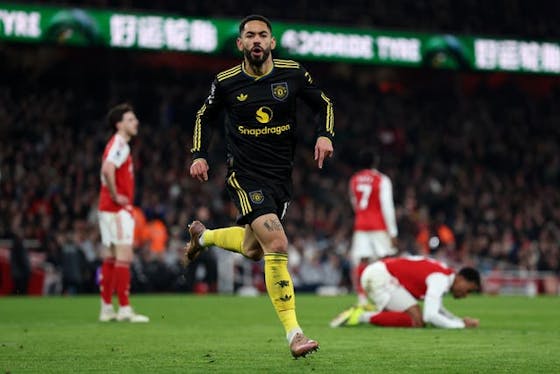
open image in gallery
Matheus Cunha has delighted in his role as a super sub under Carrick but will be pushing for a starting berth (Getty Images)
In Sesko’s case, part of the logic in asking Mbeumo to lead the line may be the probability that he is the best finisher at the club; he may also suit the counter-attacking strategy Carrick is implemented. Maguire, meanwhile, remains United’s most reliable penalty-box defender.
He is also one of the survivors of Carrick’s previous spell on the coaching team. Four players he picked in 2021 – Luke Shaw, Dalot, Maguire and Fernandes – have been chosen again. Amad Diallo was an unused substitute in two of those games, while Carrick worked with Mainoo when doing his coaching badges. Those familiar to him may have had a headstart over more recent recruits, but his choices have been vindicated.
And the most controversial of them actually came four years ago. For his first game at the helm, against Villarreal in 2021, he dropped Fernandes for Donny van de Beek. The Portuguese came on to set up Sancho’s goal. Carrick showed then he would change a winning team, dropping Ronaldo at Chelsea. Now Carrick’s class of 2026 have consecutive startling wins, to give him a decision whether to stick or twist; whether, like Tuchel, he has one idea that is so good it will work for the season or if it was a two-game masterplan.